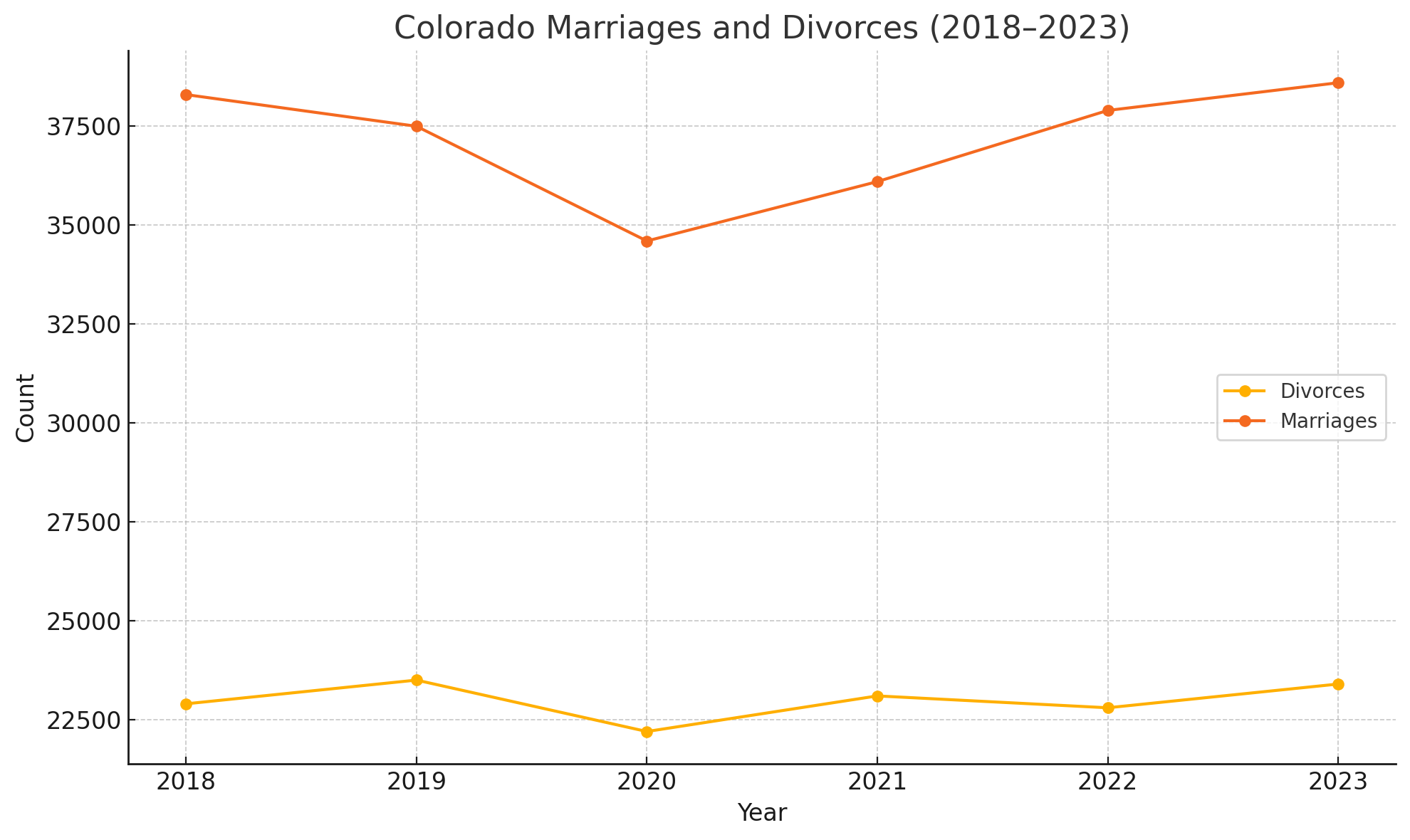
Colorado’s evolving population landscape plays a significant role in shaping divorce patterns across the state. With a growing number of residents, increasing diversity, and shifts in household structure, it’s essential to examine how these demographic trends relate to marriage dissolution.
Population Growth and Urbanization
As of 2024, Colorado’s population exceeds 5.9 million residents. Cities like Denver, Colorado Springs, and Fort Collins have experienced rapid growth due to job opportunities, education, and lifestyle appeal. Urban areas often see higher divorce rates due to greater anonymity, economic independence, and access to legal resources. In contrast, rural counties tend to exhibit lower rates of divorce, often attributed to traditional family structures and community support systems.
Marriage and Divorce Rates in Colorado
According to the Colorado Department of Public Health and Environment:
- The marriage rate in Colorado has slightly declined over the last decade, dropping from 6.9 per 1,000 residents in 2013 to 6.1 in 2022.
- The divorce rate has also gradually decreased, from 3.9 per 1,000 residents in 2013 to 2.8 in 2022.
While these trends mirror national patterns, the data reveal important regional differences. Counties with younger populations, such as Boulder and Denver, report higher numbers of marriages and divorces, while counties with older demographics, like Jefferson and Douglas, tend to see lower divorce rates overall.
Age and Education Factors
Divorce is most common among individuals aged 30 to 44 in Colorado, aligning with national data. This age group often faces pressure from career growth, homeownership, and parenting responsibilities. Educational attainment also plays a role:
- College graduates tend to have lower divorce rates, likely due to financial stability and delayed marriage.
- Those without a college degree may face economic stressors that contribute to marital breakdowns.
Economic Stress and Cost of Living
Colorado’s rising housing prices and cost of living have put additional strain on couples. As of 2024, the median home price in Colorado surpasses $525,000. Financial stress, including housing instability and debt, is a frequently cited reason for divorce across all income levels. In dual-income households, lack of work-life balance can also exacerbate tensions, leading to separation.
Common Reasons for Divorce in Colorado
Based on data from Colorado family law practitioners and court filings, the most cited causes of divorce in the state include:
- Financial disagreements and debt accumulation
- Communication breakdown or emotional neglect
- Infidelity or trust issues
- Mental health struggles and substance abuse
- Differences in parenting styles or values
While Colorado is a no-fault divorce state, meaning spouses do not need to prove wrongdoing to file for divorce, understanding these underlying reasons can help inform policy, legal counsel, and support services.
Cultural Shifts and Family Dynamics
Colorado’s family structure is changing. Blended families, same-sex marriages, and cohabiting partners are increasingly common. These shifts affect how the legal system approaches parenting time, child support, and spousal maintenance. The state’s move toward shared parenting and mediation reflects a broader trend of cooperation over conflict in family law.
Population Growth and Urbanization Impact
As of 2024, Colorado's population exceeds 5.9 million residents, representing steady growth that has transformed the state's social and economic landscape. Cities like Denver, Colorado Springs, and Fort Collins have experienced rapid growth due to job opportunities, education, and lifestyle appeal. This urbanization trend significantly influences divorce patterns throughout the state.
Urban areas often see higher divorce rates due to several interconnected factors:
- Greater Anonymity
Large cities provide more privacy and less social pressure to maintain struggling marriages, allowing individuals to pursue divorce without the intense community scrutiny common in smaller communities.
- Economic Independence
Urban areas typically offer more employment opportunities, particularly for women, creating financial independence that makes divorce more feasible for previously dependent spouses.
- Access to Legal Resources
Cities have more family law attorneys, mediators, and support services, making the divorce process more accessible and less daunting for couples considering separation.
- Social Networks
Urban environments often provide broader social support systems and acceptance of divorced individuals, reducing the stigma traditionally associated with marriage dissolution.
In contrast, rural counties tend to exhibit lower rates of divorce, often attributed to traditional family structures, stronger community support systems, and economic factors that make divorce less practical or desirable. Rural communities frequently emphasize marriage preservation through religious institutions, extended family networks, and cultural values that prioritize family stability.
Detailed Marriage and Divorce Rate Analysis
According to comprehensive data from the Colorado Department of Public Health and Environment, marriage and divorce trends reveal important insights about changing social patterns:
Marriage Rate Trends:
- The marriage rate in Colorado has slightly declined over the last decade, dropping from 6.9 per 1,000 residents in 2013 to 6.1 in 2022
- This 11.6% decrease reflects national trends toward delayed marriage and increased cohabitation
- Peak marriage rates typically occur in late spring and early fall, with June remaining the most popular wedding month
Divorce Rate Evolution:
- The divorce rate has also gradually decreased, from 3.9 per 1,000 residents in 2013 to 2.8 in 2022
- This 28.2% reduction aligns with national patterns showing overall declining divorce rates
- The decrease may reflect more careful marriage decisions, improved relationship education, and changing attitudes toward commitment
While these trends mirror national patterns, the data reveals important regional differences across Colorado's 64 counties. Counties with younger populations, such as Boulder and Denver, report higher numbers of marriages and divorces, reflecting the transient nature of young adult populations and career-focused lifestyles.
Conversely, counties with older demographics, like Jefferson and Douglas, tend to see lower divorce rates overall, possibly due to the stability of long-term marriages and empty-nest couples who have weathered earlier marital challenges.
Age Demographics and Marriage Stability
Divorce patterns in Colorado closely correlate with age demographics, with distinct trends emerging across different life stages:
Peak Divorce Age (30-44): Divorce is most common among individuals aged 30 to 44 in Colorado, aligning with national data. This age group often faces multiple simultaneous pressures including:
- Career advancement demands and workplace stress
- First-time homeownership and mortgage responsibilities
- Peak child-rearing years with associated financial and emotional demands
- Identity formation and changing personal goals
- Accumulated relationship issues reaching crisis points
Young Adult Marriages (20-29): While less common than in previous decades, divorces in this age group often stem from:
- Financial instability and student loan debt
- Career uncertainty and frequent relocations
- Incomplete personal development and changing values
- Limited relationship experience and conflict resolution skills
Midlife Transitions (45-59): This demographic experiences "gray divorce" trends, often triggered by:
- Empty nest syndrome and redefined relationship dynamics
- Career transitions and retirement planning
- Health issues and mortality awareness
- Accumulated relationship dissatisfaction reaching a tipping point
Later Life Considerations (60+): Older adult divorces, while less common, often involve:
- Financial security concerns and retirement planning
- Health care needs and caregiving responsibilities
- Desire for personal fulfillment in remaining years
- Blended family complications from previous marriages
Educational Attainment and Economic Stability
The relationship between education and divorce rates in Colorado reflects broader socioeconomic patterns that influence marriage stability:
College Graduate Advantages:
- College graduates tend to have significantly lower divorce rates, likely due to multiple factors
- Financial stability from higher earning potential reduces monetary stress on marriages
- Delayed marriage allows for better partner selection and personal development
- Better communication and problem-solving skills developed through higher education
- Access to professional networks and resources for relationship support
Non-College Graduate Challenges:
- Those without college degrees may face economic stressors that contribute to marital breakdowns
- Lower average incomes create financial pressure that strains relationships
- Limited career mobility may increase stress and relationship dissatisfaction
- Earlier marriage ages often correlate with higher divorce risks
- Reduced access to relationship counseling and support resources
Professional and Technical Education: Colorado's growing technology and skilled trades sectors create unique demographic patterns:
- Technical professionals often have stable incomes but demanding work schedules
- Shift work and travel requirements can strain marriages
- Rapid industry changes may create job insecurity affecting relationships
Economic Pressures and Cost of Living Crisis
Colorado's rapid economic growth has created a challenging environment for many families, with housing costs and living expenses significantly impacting marriage stability:
Housing Market Impact:
- As of 2024, the median home price in Colorado surpasses $525,000, making homeownership increasingly difficult
- Rising rents force many families to spend excessive portions of income on housing
- Geographic mobility for affordable housing disrupts social support networks
- Homeownership stress and mortgage pressure contribute to marital tension
Financial Stress Factors:
- Student loan debt affects younger couples disproportionately
- Healthcare costs create unexpected financial burdens
- Childcare expenses often exceed mortgage payments for families
- Economic inequality increases relationship strain across income levels
Dual-Income Household Pressures:
- Both partners working creates scheduling and household management challenges
- Limited time for relationship maintenance and communication
- Career competition between spouses can create resentment
- Work-related stress compounds relationship difficulties
Regional Variations and County-Level Analysis
Colorado's diverse geography and economy create distinct regional patterns in divorce rates:
Front Range Urban Corridor (Denver, Boulder, Fort Collins):
- Higher divorce rates due to urban factors
- Greater access to legal services and support systems
- More diverse population with varying cultural attitudes toward marriage
- Economic opportunities that support independence
Mountain Resort Communities (Aspen, Vail, Telluride):
- Seasonal employment patterns affect relationship stability
- High cost of living creates financial stress
- Transient population with fewer long-term community ties
- Service industry jobs with irregular schedules
Eastern Plains Rural Areas:
- Lower divorce rates reflecting traditional values
- Limited access to legal and counseling services
- Economic dependence on agriculture creates unique stressors
- Stronger community and family support systems
Western Slope Regions:
- Mixed urban and rural characteristics
- Energy industry employment creates boom-bust cycles
- Outdoor recreation culture attracts diverse populations
- Geographic isolation may limit service access
In-Depth Analysis of Divorce Causes
Based on comprehensive data from Colorado family law practitioners, court filings, and social research, the most frequently cited causes of divorce in the state reveal complex underlying patterns:
Financial Disagreements and Debt Accumulation (35% of cases):
- Credit card debt and overspending create ongoing conflict
- Different financial philosophies and money management styles
- Hidden debts or financial infidelity damaging trust
- Inadequate communication about financial goals and priorities
Communication Breakdown and Emotional Neglect (28% of cases):
- Gradual erosion of emotional intimacy and connection
- Inability to resolve conflicts constructively
- Lack of quality time due to work and family obligations
- Different communication styles leading to misunderstandings
Infidelity and Trust Issues (22% of cases):
- Physical affairs and emotional relationships outside marriage
- Online relationships and social media complications
- Betrayal of trust in financial or personal matters
- Inability to rebuild trust after initial betrayals
Mental Health and Substance Abuse (18% of cases):
- Untreated depression, anxiety, and other mental health conditions
- Alcohol dependency and drug abuse affecting family stability
- Gambling addiction and other compulsive behaviors
- Lack of access to or resistance to professional treatment
Parenting and Value Differences (15% of cases):
- Disagreements about discipline and child-rearing approaches
- Conflicts over educational and extracurricular priorities
- Religious and cultural differences affecting family decisions
- Blended family challenges and stepparent relationships
Note: Percentages exceed 100% as couples often cite multiple contributing factors
Legal System Adaptations and Future Trends
Colorado's legal system continues adapting to changing demographics and family structures:
Collaborative Approaches:
- The state's move toward shared parenting reflects recognition of children's needs for both parents
- Mediation and collaborative divorce options reduce adversarial proceedings
- Focus on cooperation over conflict in family law proceedings
- Specialized courts and programs addressing specific demographic needs
Technology Integration:
- Online divorce filing and case management systems
- Virtual mediation and counseling services
- Electronic payment systems for support obligations
- Digital communication platforms for co-parenting
Cultural Competency Development:
- Training for legal professionals on diverse cultural perspectives
- Translation services and culturally appropriate resources
- Recognition of cultural differences in conflict resolution
- Specialized programs for military families and other unique populations
Policy Implications and Future Considerations
Understanding Colorado's demographic and divorce patterns has important implications for policy development:
Prevention and Support Services:
- Marriage education and relationship counseling accessibility
- Financial literacy programs addressing money-related marital stress
- Mental health services integration with family support systems
- Community-based programs supporting family stability
Legal System Improvements:
- Streamlined processes for uncontested divorces
- Enhanced enforcement mechanisms for support obligations
- Improved coordination between counties and state agencies
- Technology improvements reducing costs and delays
Economic Development Considerations:
- Housing policy addressing affordability and family stability
- Workplace policies supporting work-life balance
- Economic development strategies considering family impacts
- Transportation and infrastructure supporting family connectivity
Colorado's demographic trends and divorce patterns reflect the complex interplay of economic pressures, social changes, and individual choices affecting modern families. While divorce rates have generally declined, the underlying factors contributing to marriage dissolution remain significant concerns requiring continued attention from policymakers, legal professionals, and community leaders.
Understanding these patterns helps create more effective support systems, legal procedures, and community resources that can strengthen marriages while providing appropriate assistance when relationships cannot be preserved. As Colorado continues to grow and evolve, monitoring these demographic trends remains essential for ensuring that families receive the support they need to thrive in an increasingly complex social and economic environment.
The state's progressive approach to family law, combined with its diverse population and economic opportunities, positions Colorado to continue developing innovative solutions for supporting healthy relationships and managing the challenges that inevitably arise when marriages end. By addressing the root causes of divorce while improving the systems that support families through transitions, Colorado can continue serving as a model for other states facing similar demographic and social challenges.